
Our chicken pasture · Step one
Making room for the girls, one slow step at a time.
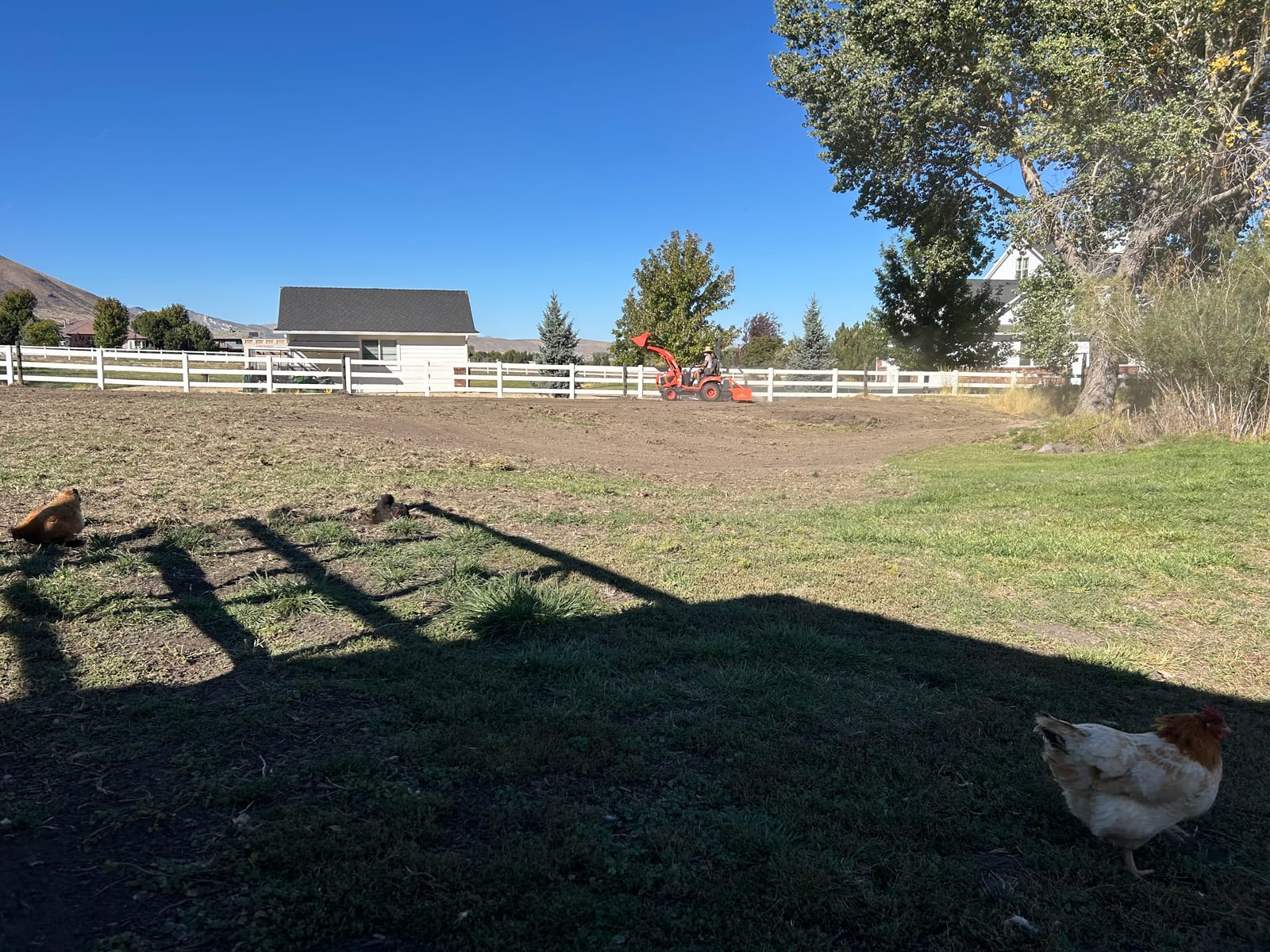
Every big vision seems to begin with a stretch of bare dirt and the willingness to see what it can become. This part of our yard is going to be a dedicated space for our hens, a place where they can forage, move between paddocks, and have fresh ground growing beneath them.
It may not be ready for the girls until spring, and that is okay. The goal is not to rush them into a new space. The goal is to build something that can keep working for them, for us, and for the rest of the property over time.
Starting with the ground
Dylan used the tractor to grade and loosen the area before we seeded it. Along the back fence, there was also a high berm and ditch that made mowing difficult. He leveled that section so it will be much easier for me to maintain once everything starts growing.
That practical work matters just as much as the pretty vision. A chicken pasture still has to fit into everyday life. We need to be able to mow around it, water it, move fencing, and care for it without turning every small task into a struggle.
A pasture made from a few different seeds
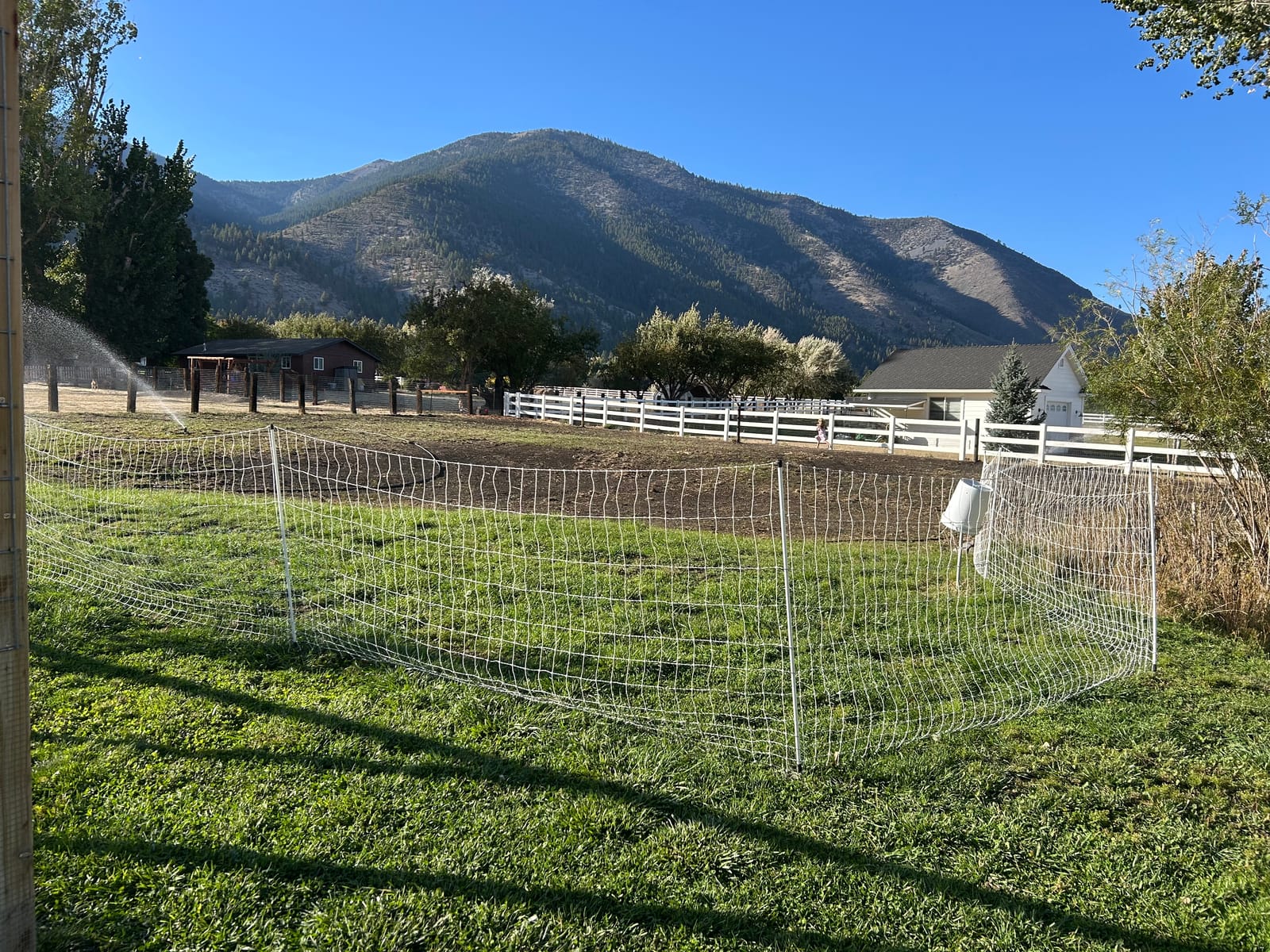
We purchased the Chicken Forage Seed Mix directly from Nature’s Seed. Separately, we purchased the Outsidepride white Dutch clover through Amazon. We blended both of those with field or pasture seed from our local Comstock Seed before spreading everything across the new paddock area.
The Outsidepride white Dutch clover is one I have purchased several times for different areas around our property. In addition to blending it into the chicken paddock, I spread it heavily around the perimeter of our pond, another area we are slowly working to beautify, and added it to our ditches. It has become one of those simple products I keep coming back to because it has worked so well for us.
I may earn a commission if you purchase through this link, at no extra cost to you.
Find the Outsidepride White Dutch Clover Seed on Amazon
We have bought grass and pasture seed from Comstock before, and it has always done well for us. I love being able to include something from a local seed company alongside the other varieties we are testing here.
Right now, we are taking advantage of this beautiful stretch of weather to help the whole area sprout. Four sprinklers are set on timers so we can keep the seedbed consistently watered while the new growth gets started.
Paddocks, not one worn-out run
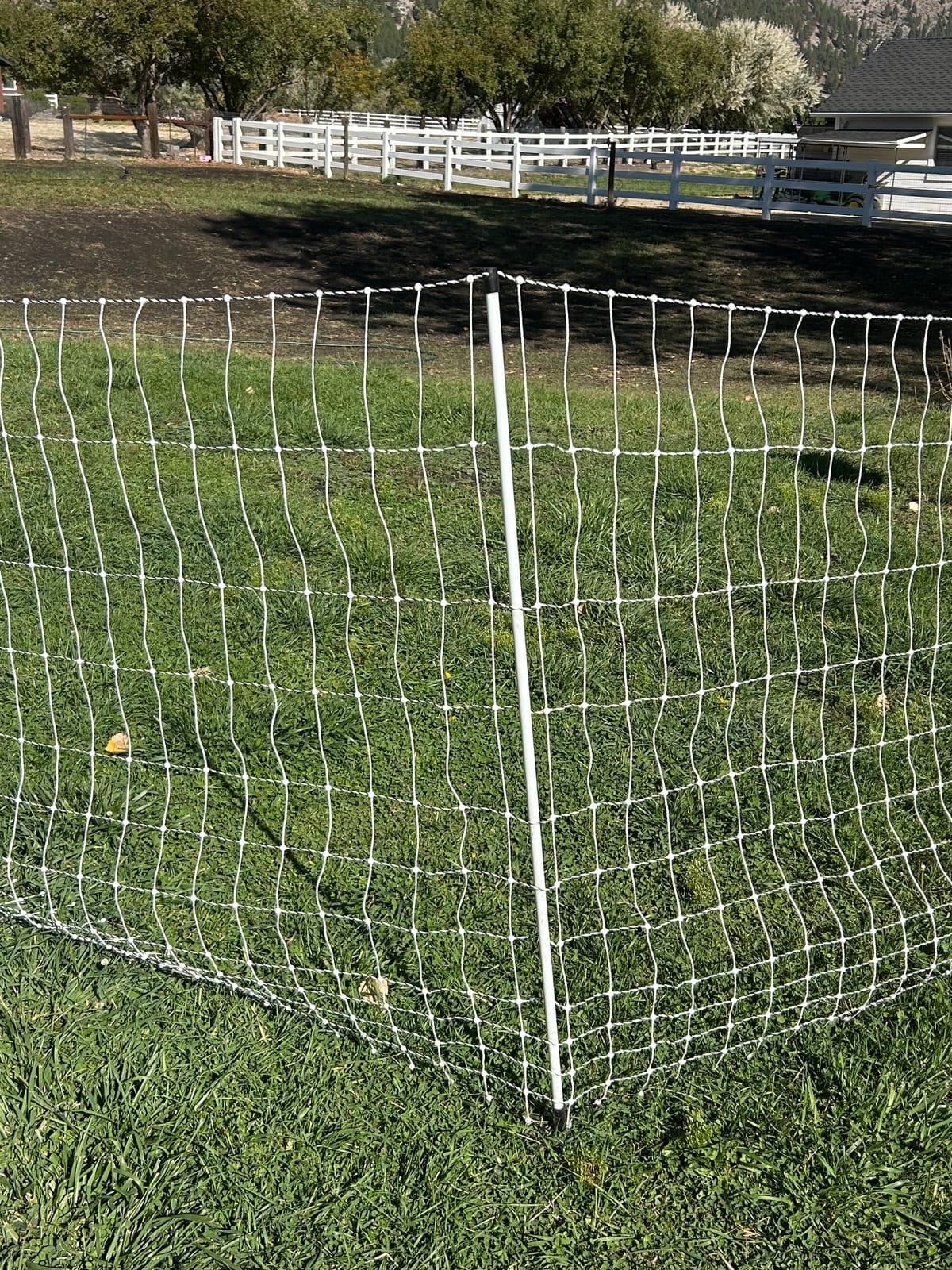
Long term, the Premier 1 PoultryNet electric fence already shown in our photos will help form the outside boundary. Because the netting can be repositioned, we can add another line through the center, or adjust the layout however we need, to create separate paddocks. While the chickens forage in one section, another section can be watered, rested, and given a chance to grow back.
When Dylan and I set it up, the fencing was very easy to maneuver. It did take both of us working together to stretch it out and keep it from getting tangled, but overall the setup was simple and we have loved the product so far. It was an expensive purchase, but I feel like the flexibility it gives us will make it worth the investment.
I may earn a commission if you purchase through this link, at no extra cost to you.
Find the Premier 1 PoultryNet electric fence on Amazon
This dedicated area should also help keep the girls out of our main lawn and flower beds. As our plans grow, it will give us a clearer separation between the chickens, the future flower field, and the new space we are imagining for melons and other food crops next year.
That is the larger vision: not simply containing the chickens, but designing a part of the property where their needs and ours can work together.
A future raspberry patch just south of the paddock
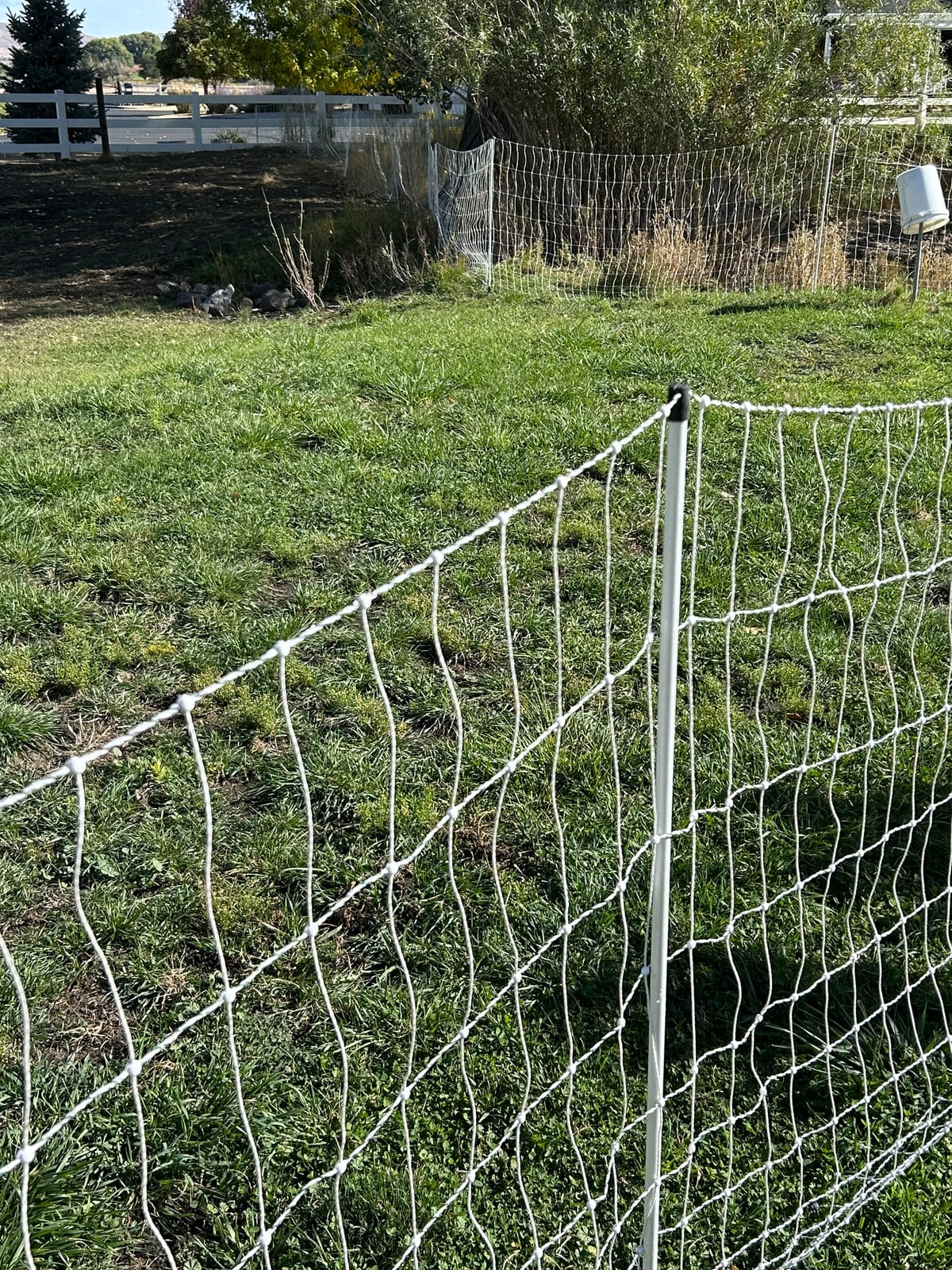
Part of the electric netting may eventually take on a second job as a movable barrier around our new raspberry patch, helping discourage deer from browsing the plants. Soon, we plan to dig up some of the suckers and canes from our existing raspberries and transplant them along the north side of the garden, immediately south of the chicken paddock.
The hope is to give those raspberries room to spread and set us up for a much more abundant harvest next growing season. When we begin moving the plants and preparing that new patch, it will deserve a story of its own.
Thinking ahead to shade and shelter
Eventually, we would like to plant bushes inside the area or create small shade-sail shelters. The girls need places to cool down and places where they can get out of the open sky when aerial predators are nearby.
There are still details to work out, and we will learn more once the pasture starts growing and the hens begin using it. That is part of this life for us: start with a vision, do the next practical thing, pay attention, and adjust.
Slow work can still be exciting work. Right now, this is graded soil, seed, sprinklers, and fencing. In time, it can become a living space made especially for the girls.